
REMAFLON Lining
REMAFLON lining is a combination of PTFE (polytetrafluoroethylene) and rubber, featuring a non-stick, slippery surface which prevents extreme build-up and material flow problems.
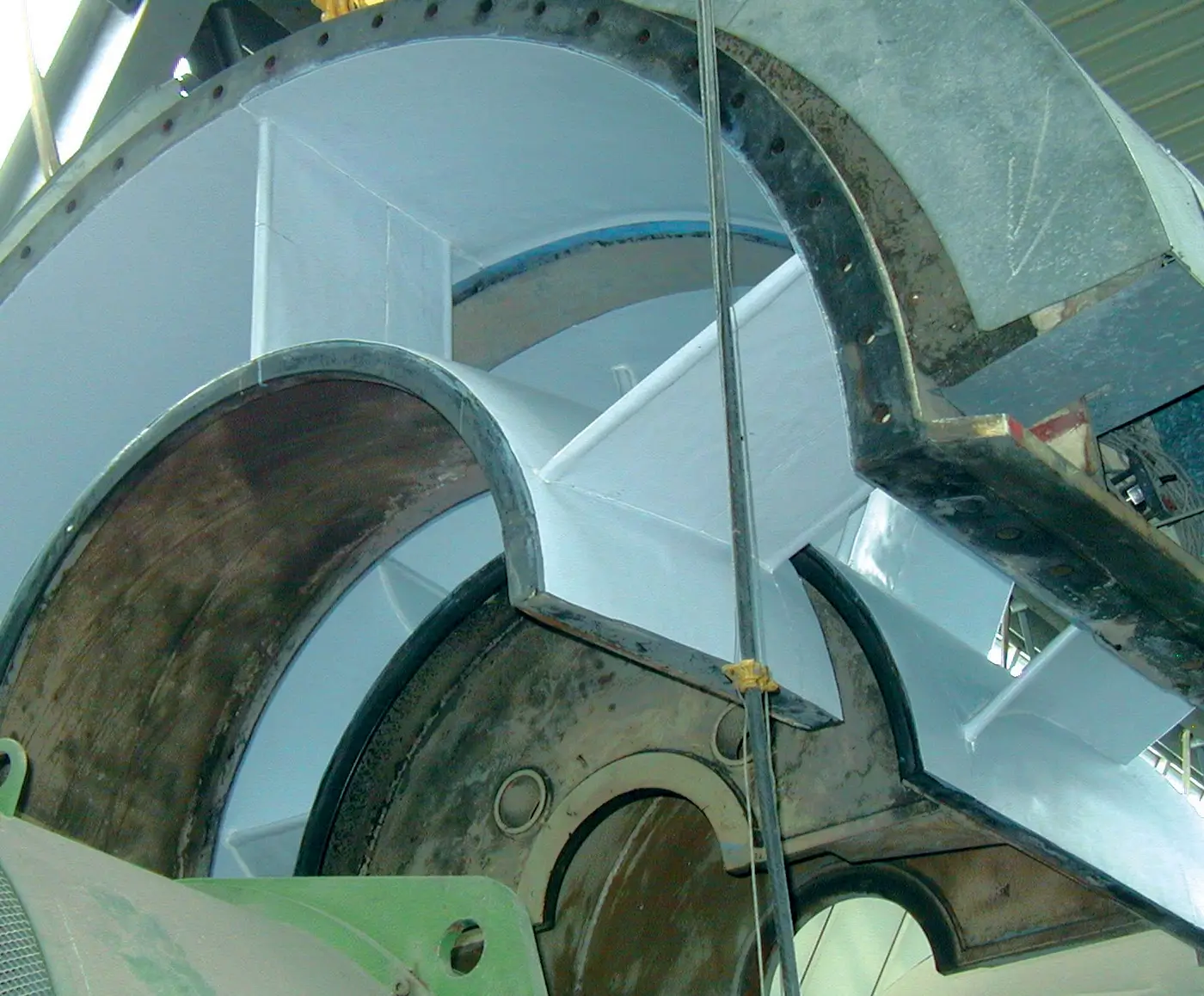
Classifier wheel shovel lined with REMAFLON
REMAFLON
REMAFLON lining is a combination of PTFE (polytetrafluoroethylene) and rubber, featuring a non-stick, slippery surface which prevents extreme build-up and material flow problems.
REMAFLON
REMAFLON lining has a combination of polytetrafluorethylene (PTFE = Teflon®) and rubber to provide an exceptional solution for your material conveying needs. The remarkably slippery surface of REMAFLON prevents extreme buildup and material flow problems, ensuring smooth operation and uninterrupted production.
REMAFLON also provides perfect protection in most conveying applications where dust or very fine and slightly moist material is prone to buildup.
Thanks to its virginal PTFE surface, REMAFLON boasts outstanding anti-adhesive properties, providing a surface that is even more slippery, and reducing the risk of buildup.
Properties
- Safe protection from material flow Problems
- Excellent anti-caking properties thanks to the Teflon® surface (PTFE = extremely low adhesion and friction coefficients)
- Very good chemical resistance
- Noise damping
- CN bonding layer provides fast and good adhesion
- Teflon® surfaces approved for contact with food
Area of application
- Used for toughest caking and material flow problems requiring the use of Teflon surfaces, such as for REA plaster or for the molasses segment (wet) of the sugar industry
- Flow improvement of very fine and powdery, non-abrasive materials
- Lining to prevent bridging and obstructions
- Lining for gutters, slides, transfer stations and containers
- Coating for walls and outlet elements in glass production Lining to prevent bridge formation and blockage

REMAFLON
Surface: White, PTFE virginal, 1 mm
Base: Rubber (black) with CN bonding layer, 2 mm
Technical Data:
| Color | White | |
| Rubber | PTFE | DIN ISO 1629 |
| Hardness | 54 SHORE D | DIN ISO 7619-1 |
| Density | 2.16 g/cm³ (134.84 lb/ft³) | DIN EN ISO 1183-1 |
| Tensile Strength | 24 N/mm² (3481 psi) | DIN 53 504 |
| Elongation at break | 250% | DIN 53 504 |