
Corrosion Protection Rubber Linings
REMA TIP TOP corrosion protection rubber linings provide an impenetrable barrier against aggressive chemicals and extreme abrasion. Engineered for tanks, pipes, and scrubbers, our soft and hard rubber systems ensure long-term structural integrity, significantly extending asset life while minimizing maintenance intervals and costly plant downtime.
Corrosion Protection Rubber Linings
Protect your critical equipment from chemical attack and abrasion with REMA TIP TOP’s high-performance rubber lining systems. Our CHEMOLINE soft rubber linings and CHEMONIT hard rubber linings deliver exceptional durability in demanding industrial environments.
Produced on an ultra-modern roller head system with an integrated vacuum extruder, our rubber sheets are pore-free and absolutely homogeneous — guaranteeing long, reliable operating times.
REMA TIP TOP offers the following types of rubber:
- Bromobutyl rubber (BIIR)
- Chlorobutyl rubber (CIIR)
- Chloroprene rubber (CR)
- Natural rubber (NR)
- Hypalon (CSM)
- Isoprene rubber/Styrol-butadiene rubber (IR/SBR)
- Bromobutyl/Polyvinylchloride (BIIR/PVC)
- Chlorobutyl rubber/Chloroprene rubber (CIIR/CR)
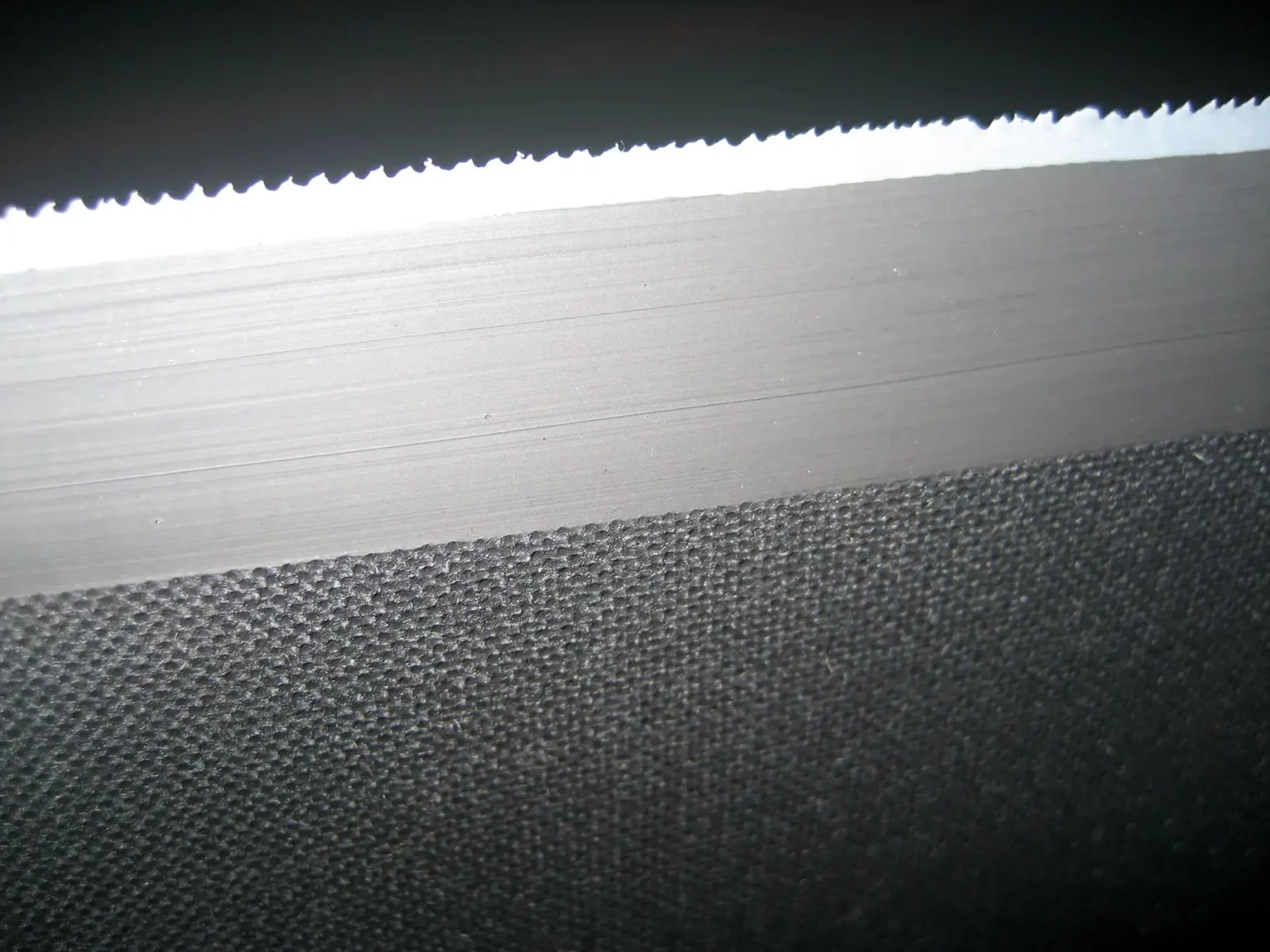
Section through a homogeneous pore-free REMA TIP TOP rubber lining
Workshop Rubber Lining
For components that fit into an autoclave and can be transported, such as pipes, flue gas scrubbers, quench towers, venturi scrubbers, filter and storage tanks, reaction and pickling tanks, centrifuges, road- and railway tanks, valves as well as rollers and drums, REMA TIP TOP workshop rubber linings offer optimal protection.
CHEMOLINE soft rubber lining – unvulcanized or self-vulcanizing
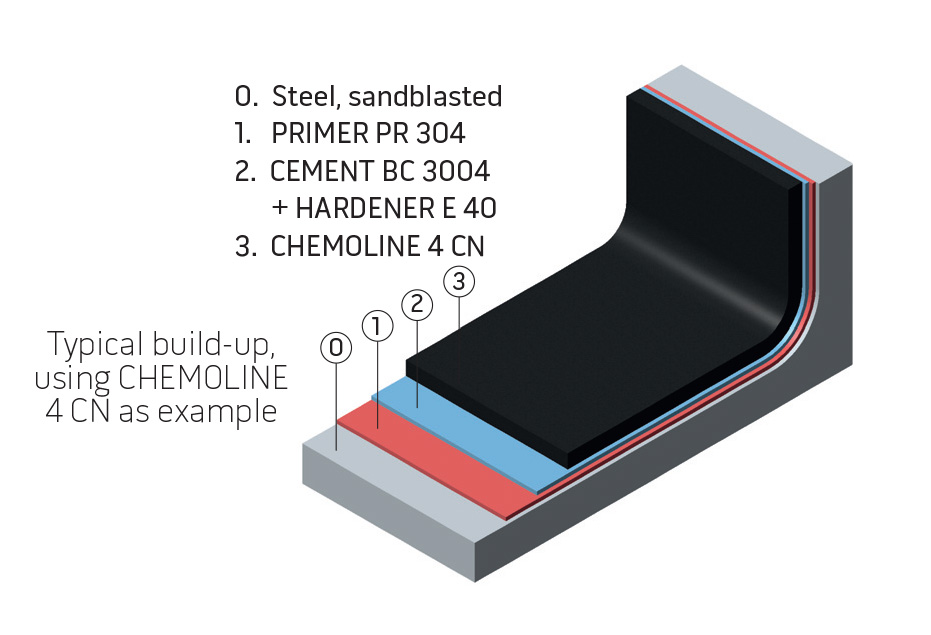
In these soft rubber linings, such as CHEMOLINE 4 CN, the rubber sheets are vulcanized and contain an easy-to-bond CN base layer. These rubber sheets can be bonded to both steel and concrete substrates. These rubber lining materials will be applied using special REMA TIP TOP adhesives and no further vulcanization is necessary. The applied rubber lining can be put directly into service without any further loss of time due to a vulcanization process.

CHEMOLINE soft rubber lining – vulcanized
Unvulcanized CHEMOLINE soft rubber lining products are normally vulcanized in an autoclave. However these can also be vulcanized on the construction site with steam or hot water. Specially developed rubber lining materials and adhesives can be used up to an operating temperature of 120 °C after vulcanization.
Self-vulcanizing soft rubber lining compounds also vulcanize at ambient temperatures over a longer period of time (months). For certain media, partial vulcanization is often sufficient and full vulcanization then occurs under operating conditions.
CHEMONIT hard rubber lining
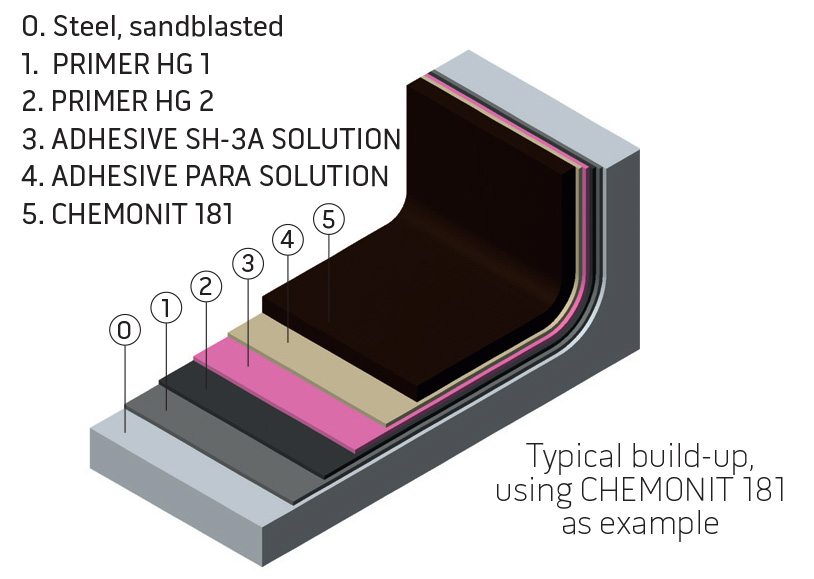
CHEMONIT hard rubber lining materials are applied un-vulcanized and must be subsequently vulcanized. Vulcanization is normally carried out in an autoclave under temperature and pressure. Special hard rubber lining compounds can also be vulcanized on the construction site with steam or hot water.
On-Site Rubber Linings
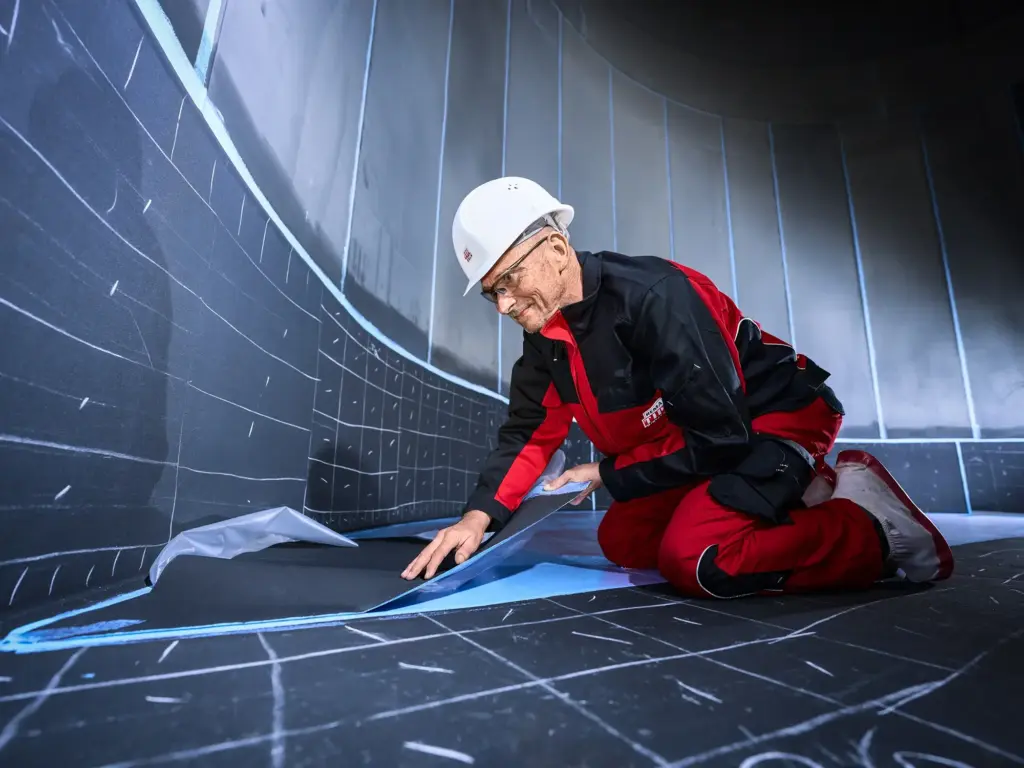
REMA TIP TOP has developed rubber linings for all industrial sectors that can be applied on site regardless of component size. These on-site rubber linings deliver optimal protection for storage containers, pipes, reaction vessels, flue gas scrubbers, and more — as well as for concrete components such as wastewater sewers and deionizing and neutralization basins. REMA TIP TOP on-site rubber lining stands up to acids, lyes, and salt solutions — even when high temperatures or temperature fluctuations intensify their effects — and handles mechanical stresses equally well.
Different materials are used depending on the requirements and conditions on site.