
RG 7000 Conveyor Belt Repair Material | FAQs
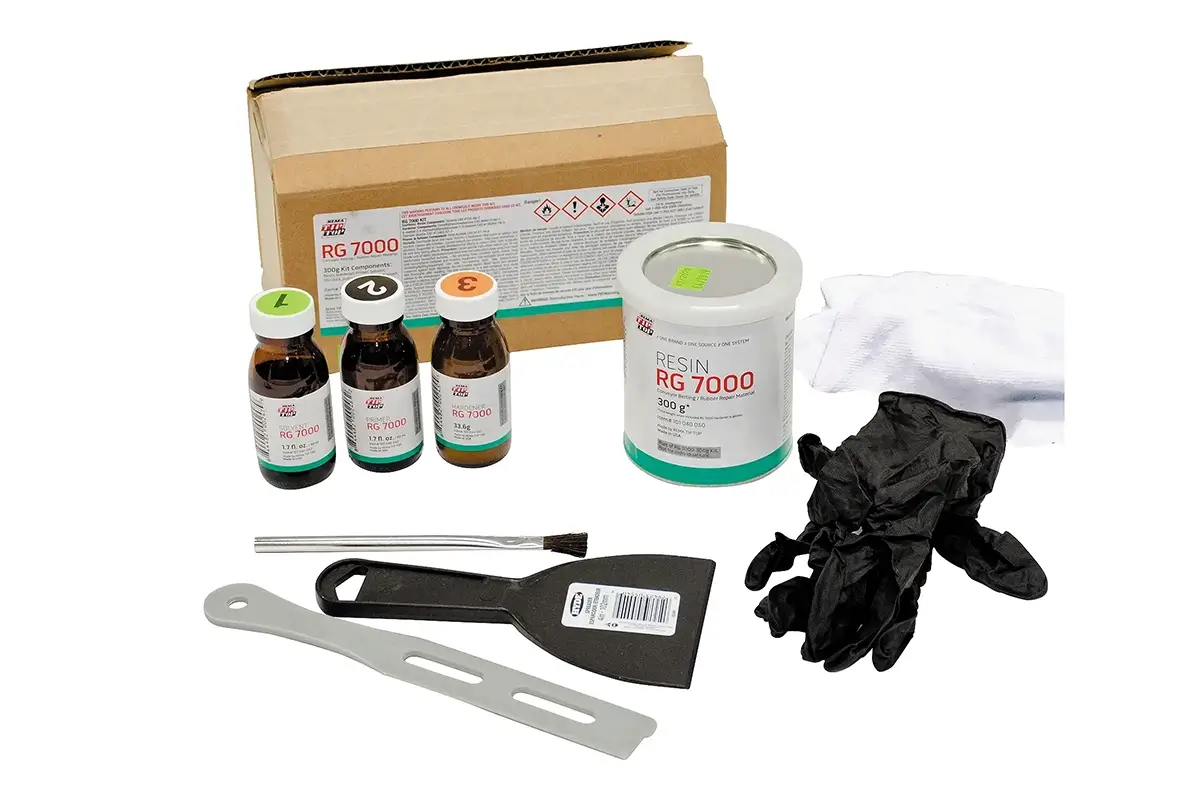
What size is RG 7000 available in?
Quart 750g Kit
Pint 300g Kit
What size area will the pint cover?
At 1/4″ deep: 8″ x 7″ damage area (56 square inches).
What size area will the quart cover?
At 1/4″ deep: 12″ x 12″ damage area (144 square inches).
How will the RG 7000 wear compared to Rubber Belting?
Grade II SBR Belt.
What are the storage requirements for RG 7000?
Store at room temperature. Below 32OF, RG 7000 will turn to a gel.
Does RG 7000 have a UV inhibitor?
Yes, RG 7000 has a component which protects the compound from UV degradation.
What will happen if I don’t let the solvent fully dry before applying the primer?
May cause a dilution of the primer, decreasing the etching capabilities and possibly impacting the adhesions.
Do I have to use the Primer?
Yes. The primer is critical to achieve the full adhesion values. Not using the primer will greatly inhibit the bonds and create premature bond failures.
What will happen if I don’t let the primer fully dry before applying RG 7000?
Primer gases will become trapped under the resin and lead to a bond failure.
Can I lessen the amount of Hardener I use to extend my working time?
No. RG 7000 is a two component system that was engineered to work together in the exact portions provided to achieve maximum physical properties. Reducing the hardener, even by a little will impact the development and final physical properties.
I spilled a little of the hardener as I was pouring it in, is this a problem?
If you spilled a significant amount of material (1 TBSP or more), take a bottle from an unopened kit and use it instead. Contact customer service and request a replacement bottle of hardener.
How long do I have to keep troweling RG 7000 before it stops sagging?
3-4 mins from the time the hardener was added.
Should I wait until RG 7000 is thickened in the can before I apply to my belt?
No. Adhesions are greater when RG 7000 is applied immediately after mixing. Waiting to apply will decrease the adhesions.
Can I brush on some RG 7000 resin (not activated) to the damage area to increase adhesion?
No. Doing this will prevent any adhesion from occurring.
How long is RG 7000 pourable?
From the time the hardener is added, you have 1-2 mins to pour RG 7000 out.
To achieve full adhesion, ensure that RG 7000 makes contact with belt while still in thin, pourable state.
I was pouring RG 7000 and didn’t have enough, how do I complete my repair?
You have two options;
While original pour is still wet/tacky, mix and pour another batch of RG 7000 over the top.
Allow RG 7000 to cure for 1 hour, then follow standard installation instructions starting at step 1.
Can I cover my belt clips with RG 7000?
Yes! Using REMA TIP TOP Metal Primer PR 200 prior to applying the RG 7000 primer and activated resin.
Will RG 7000 stick to a PVC Belt?
Yes, using the PC-4 primer. Buff and clean the belt with the solvent. Apply PC-4 cement, allow to dry. Apply RG 7000 primer and allow to dry. Pour on RG 7000.
Will RG 7000 stick to a Urethane belt?
Yes. Following the RG 7000 application instructions will result in satisfactory adhesions.
Will RG 7000 stick to a MOR Belt?
Yes. Follow the standard installation instructions.
Will RG 7000 stick to a EPDM Belt?
No. Mild adhesions are formed, but not sufficient to endure under continuous belt operation.
Will RG 7000 stick to a MSHA Belt?
Yes. Following the RG 7000 application instructions will result in adhesions equal to test results.
Will RG 7000 stick to a REMALINE / Natural Rubber Skirting?
Yes. Throughly clean the area with solvent. Buff area. Clean buffed area. Apply a coat of SC 2000 or
SC 4000, allow to dry for 1 hour. Apply RG 7000 primer, allow to dry. Apply RG 7000 to prepared area.
Can I apply RG 7000 to Sheet Metal?
Yes. Following the RG 7000 application instructions will result in satisfactory adhesions.
Use of PR 200 is acceptable in this application, replace primer in regular RG 7000 instructions with PR 200, allow to dry completely before pouring on RG 7000.
Will RG 7000 stick to a Concrete?
No.
Will RG 7000 stick to a Wood?
Yes. Clean area with solvent. Sand to create a rough profile, clean. Apply RG 7000 primer. Apply RG 7000 to prepared area.
What tools are necessary to complete a repair?
Buffing tool
Screwdriver to open RG 7000 can
Brush or other tool to clean foreign material away from repair area
Can I use RG 7000 on a belt with belt scrapers?
Yes. Buff the repair section down to the belt level as needed to ensure proper scraper performance.
Make sure the leading edge of the RG 7000 repair is not a fine point that will allow the scraper to dig in and begin to rip the repair off the belt.
What is the smallest pulley diameter that RG 7000 can wrap around?
RG 7000 is able to flex around very small diameters (4″-6″) but continuous use around small pulleys will vary depending on speed of belt, belt tension and other system factors.
It is suggested that RG 7000 be monitored closely when used on pulleys 14″ in diameter and smaller.
Buffing a larger surface area to increase adhesion area will help RG 7000 successfully flex around smaller pulley diameters.
Can I install in temperatures below 32O°F?
Yes, it will increase the amount of time it takes to cure.
Anything that can be done to increase the ambient temperature of the belt or around the belt will help to ensure ideal development of physical properties.
RG 7000 itself needs to be stored in warmer area prior to use to ensure materials activate correctly.
What is the maximum damage size I can/should use RG 7000 on?
It depends! Things that should be considered when looking to repair a belt:
Damage to the integrity of the belt.
Size and depth of repair. If damage is large diameter and all the way through the belt, there may not be enough surface area to damage area for the repair to stay put. A large section of the top of the belt may need to be buffed and used to ensure enough bond area for the repair to not fail.
Can I add fabric to my RG 7000 repair area to increase strength of repaired area?
Yes. We recommend using uncoated breaker fabric, like what is used in vulcanized splices.
Put a layer of RG 7000 down, lay the fabric on top, push down into the RG 7000 to prevent air bubbles, then pour another layer of RG 7000 over the top.
Make sure fabric is below the belt surface level. Do not use uncured, coated breaker fabric as the uncured rubber will not bond cure out and bond to the fabric, creating a void in the repair.