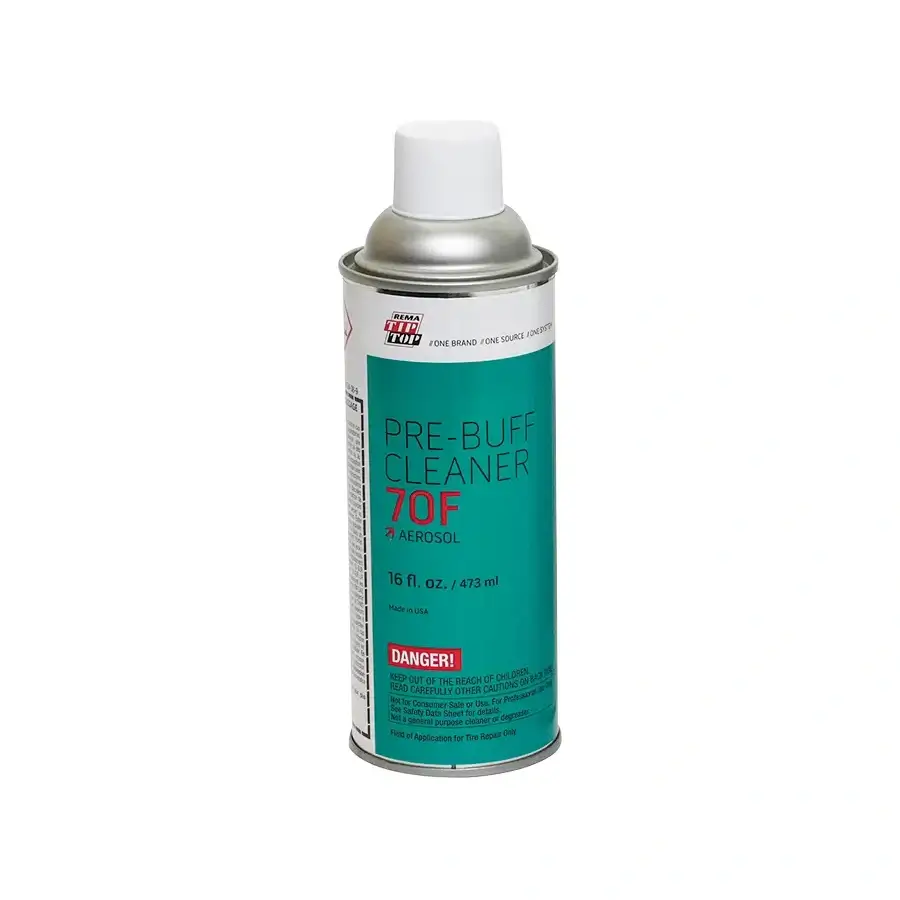
Why Cleaning the Tire Innerliner Before Buffing Is Critical to a Reliable Tire Repair
A dependable tire repair starts long before the repair unit is installed. One of the most important steps in preparing an injury is also one of the easiest to overlook: cleaning the innerliner with pre-buff cleaner before buffing begins.
At REMA TIP TOP, this step is an essential part of the standard repair process. Although it may seem simple, properly cleaning the repair area helps create the clean, well-prepared surface necessary for a repair that performs as intended.
Why Is the Tire Innerliner Contaminated?
Tire innerliner surfaces can collect contaminants from numerous sources during both the manufacturing process and the tire’s service life.
These contaminants may include:
- Mold-release lubricants
- Sealants
- Cooling compounds
- Ballast fluids
- Liquid bead lubricants
- Balancing compounds
- Other oils, lubricants, and foreign materials
Even when the innerliner appears clean, residues can remain on the surface.
That is why visual inspection alone is not enough. The repair area needs to be properly cleaned before mechanical preparation begins.
Why Pre-Buff Cleaner Comes Before Buffing
The name says exactly when the product should be used: pre-buff cleaner is applied before buffing.
Its purpose is to remove surface contamination, including mold-release lubricants and other residues, from the area surrounding the tire injury. Once those contaminants have been removed, the technician can buff a properly prepared, clean surface.
The order of these steps matters.
If the innerliner is buffed while contaminants are still present, the buffing wheel or buffing stone can pick up that contamination and transfer it across the newly buffed surface. Instead of producing a clean repair area, the buffing process can spread contaminants into the exact surface where adhesion is needed.
Once that occurs, the integrity of the repair may be compromised.
What Can Happen If Pre-Buff Cleaning Is Skipped?
Failing to remove innerliner contaminants before buffing can contribute to several repair problems.
Repair lifting
Contamination can interfere with adhesion between the repair system and the innerliner. This may cause the repair to begin lifting shortly after installation or later during the tire’s service life.
Contamination of the buffing tool
A contaminated innerliner can transfer material directly onto the buffing wheel or stone.
Once the tool becomes contaminated, it can spread those materials over the buffed repair area and potentially onto other surfaces it contacts.
Increased risk of repair failure
A properly buffed surface is intended to provide the foundation for a strong repair. When contaminants remain between the repair materials and the tire, that foundation is compromised, increasing the possibility of premature repair failure.
Reduced buffing wheel life
Contamination can also affect the performance and service life of the buffing wheel. Cleaning the innerliner first helps protect the tooling while improving preparation of the repair area.
Clean the Area More Than Once
For effective surface preparation, the pre-buff cleaning step should typically be performed two to three times.
Multiple cleaning passes help ensure that mold-release agents, lubricants, and other contaminants are completely removed rather than simply redistributed across the innerliner.
The goal is not just to make the surface look clean. The goal is to create a surface that is genuinely ready for buffing and the subsequent steps of the repair process.
A Simple Step With a Major Impact
In tire repair, small procedural steps can have a significant effect on the finished result.
Using pre-buff cleaner:
- Removes contaminants before mechanical preparation
- Prevents contaminants from being spread into the buffed area
- Helps protect the buffing wheel or stone
- Supports proper adhesion of the repair system
- Reduces the potential for lifting and premature repair failure
- Helps technicians consistently follow the established repair process
Pre-buff cleaning should therefore be treated as a required preparation step rather than an optional extra.
Follow the Process for a Repair You Can Trust
Successful tire repair depends on completing the entire process in the correct sequence. Skipping a step because it appears minor can introduce problems that may not become visible until after the tire has returned to service.
Always use pre-buff cleaner before buffing during the tire repair process, and clean the repair area thoroughly two to three times before moving forward.
Following every step—even the simple ones—is part of what defines the REMA standard and helps deliver a consistent, reliable repair you can trust.